Amir Temur's role in social protection
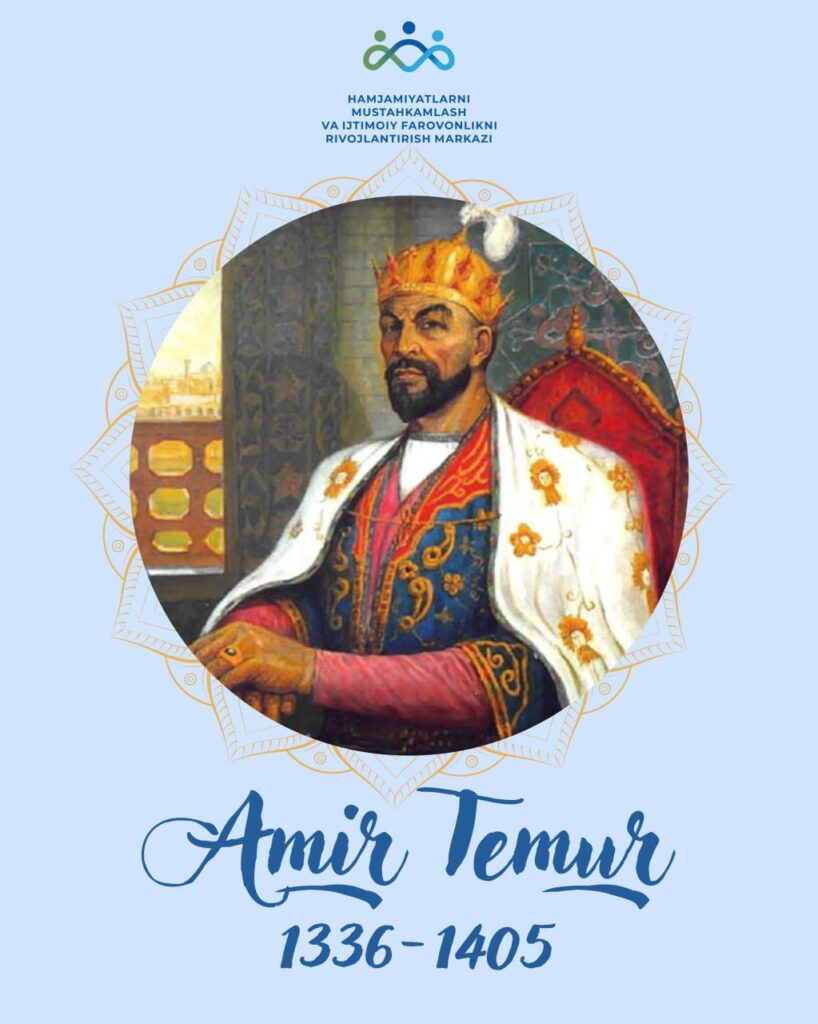
Amir Temur was not only a great commander and statesman, but also a leader who paid great attention to issues of social justice, public welfare, and social protection in his time. Through his policies, it can be seen that many modern principles of social work were formed.
- Care for the Poor and Orphans
Amir Temur considered it important to protect orphans, widows, and the poor during his time. He maintained peace in society by helping the vulnerable, providing them with housing and financial support. - The principle of justice and equality
Amir Temur, as written in the "Temur Statutes", believed that all citizens should be equal before the law. He took strict measures against tyrannical officials. Through this, he increased the population's trust in the state. - Construction of social infrastructure
The caravanserais, bridges, markets, and madrasahs-mosques he built served society. These structures not only created convenience for people, but also provided new jobs. They brought relief to people not only in their own territory, but also in the countries they invaded. - Creating opportunities for artisans and farmers
After his campaigns, Timur focused on developing crafts, farming, and trade in the regions. Through this, people had the opportunity to earn a living through their own labor. - Emphasis on education and spirituality
Timur considered science and moral education to be the basis of social stability. He opened madrasahs and supported students, scholars, and scholars. Through this, he encouraged the education and development of the younger generation.